
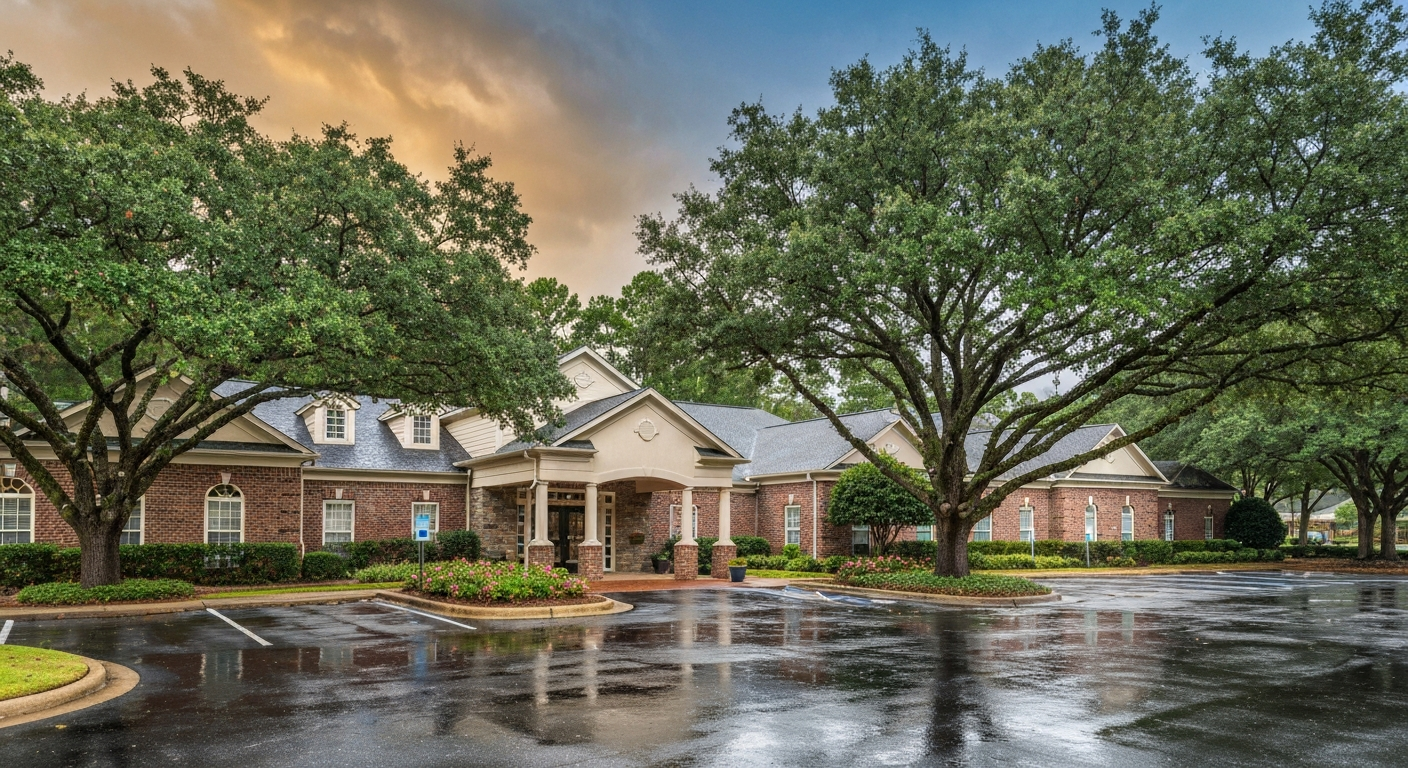
Owner financing lets sellers act as lenders in commercial real estate deals, offering flexible terms but carrying significant risks. For small business owners in Acworth, GA who need professional workspace without property ownership burdens, flexible office leasing at Bells Ferry Prime delivers all the benefits with none of the financial complexity.
Understanding what is owner financing commercial real estate can open doors for buyers who struggle to secure traditional bank loans. This alternative financing method allows property sellers to provide direct financing to purchasers, bypassing conventional lending institutions entirely. While this approach offers unique advantages for certain situations, it also introduces risks that small business owners must carefully evaluate before committing hundreds of thousands of dollars to a property purchase.
For entrepreneurs, consultants, and freelancers in Northwest Metro Atlanta, the question often extends beyond financing mechanics to a more fundamental consideration: do you actually need to own commercial property to run a successful business? The answer, increasingly, is no. Flexible office leasing has emerged as a practical alternative that delivers professional workspace benefits without the capital requirements, maintenance responsibilities, or long-term financial commitments that property ownership demands.
This guide examines how seller financing commercial property works, when it makes strategic sense, and why many professionals are choosing flexible office solutions instead of purchasing real estate outright.
How Owner Financing Works in Commercial Real Estate
Owner financing, also called seller financing, is a commercial real estate financing option where the property seller extends credit directly to the buyer instead of requiring them to obtain a traditional mortgage. The seller essentially becomes the bank, holding a promissory note secured by the property itself. This arrangement can benefit both parties when structured properly, though it requires careful negotiation and thorough documentation.
The Basic Structure of Seller-Financed Deals
In a typical owner-financed commercial real estate transaction, the buyer makes a down payment—usually between 10% and 30% of the purchase price—and then pays the remaining balance to the seller over an agreed-upon term. The seller retains a security interest in the property until the buyer completes all payments or refinances with a traditional lender.
Key components of these agreements include:
- Down payment requirements — Sellers typically require larger down payments than banks to reduce their risk exposure and demonstrate buyer commitment
- Interest rates — Rates on seller-financed deals often exceed conventional mortgage rates, sometimes by 2-4 percentage points
- Amortization periods — Payments may be calculated over 15-30 years, but the full balance often comes due much sooner
- Balloon payments — Most seller financing arrangements include a balloon payment clause requiring the buyer to pay off or refinance the remaining balance within 3-7 years
- Default provisions — Clear terms outlining what happens if the buyer misses payments or violates other agreement conditions
Why Sellers Offer Financing
Property owners agree to finance sales for several strategic reasons. Spreading the sale proceeds over multiple tax years can reduce their overall tax liability. Earning interest on the financed amount generates ongoing income that may exceed what they would receive from alternative investments. In slow real estate markets or for unique properties, offering financing can attract buyers who otherwise could not complete a purchase.
Your Private Office Awaits
Bells Ferry Prime — Acworth, GA
Fully serviced private offices with no hidden costs. Flexible leases available now.
Common Scenarios for Owner-Financed Commercial Transactions
Seller financing appears most frequently in specific market conditions and property situations. Off-market deals between parties who already have an established relationship often use this structure. Properties with unusual characteristics that make traditional lenders hesitant—such as older buildings, non-conforming uses, or locations outside prime commercial districts—may only sell with owner financing.
Business owners purchasing the building they currently lease sometimes negotiate seller financing with their landlord. This arrangement can work well when both parties have a longstanding relationship and the tenant has demonstrated reliable payment history.
Benefits and Risks of Seller Financed Commercial Property
OWNER FINANCING VS. TRADITIONAL BANK FINANCING
Traditional Bank Loan
- 20–30% down payment required
- 45–90 day closing timeline
- 680+ credit score typically needed
- Strict debt-to-income ratios
- Extensive documentation & appraisals
- Fixed terms with limited flexibility
Owner Financing
- 5–15% down payment common
- 14–30 day closing possible
- Flexible credit requirements
- Negotiable terms based on relationship
- Simplified paperwork process
- Customizable payment structures
Sources: National Association of Realtors, Commercial Real Estate Finance Council | Data reflects 2023–2024 market conditions
Like any commercial real estate financing option, owner financing presents both opportunities and potential pitfalls. Understanding both sides of this equation helps business owners make informed decisions about whether this path aligns with their goals and risk tolerance.
Advantages for Buyers
The primary appeal of seller financing lies in its flexibility compared to traditional bank mortgages. Buyers may find this approach attractive when:
- Qualification is easier — Sellers focus more on the property value and buyer’s business viability than on credit scores and extensive documentation
- Closings happen faster — Without bank underwriting, appraisals, and committee approvals, transactions can close in weeks rather than months
- Terms are negotiable — Down payments, interest rates, and payment schedules can be customized to fit both parties’ needs
- Closing costs are lower — Fewer third parties involved means reduced fees and expenses at closing
- Building relationships matters — Direct negotiation with the seller can lead to more favorable terms than institutional lending offers
Significant Risks to Consider
Despite its advantages, seller financing commercial property carries substantial risks that buyers must acknowledge and plan for. These risks extend beyond the transaction itself and can affect your business operations for years.
Higher interest rates represent the most immediate financial impact. Sellers compensate for the risk they assume by charging rates that exceed conventional mortgage rates. Over a multi-year term, this difference can add tens of thousands of dollars to your total cost.
Balloon payment clauses create refinancing pressure. When the balloon comes due—often in three to seven years—you must either pay the remaining balance in full or secure traditional financing. If your credit situation has not improved, if interest rates have risen, or if the property has declined in value, refinancing may be difficult or impossible. Failure to satisfy the balloon payment can result in losing both the property and all the equity you have built.
Due diligence remains essential even without bank requirements. Traditional lenders mandate appraisals, inspections, environmental assessments, and title searches because these protect their investment. When no bank is involved, you must still complete these steps—and pay for them—to protect yourself. Skipping due diligence to save money or time can lead to discovering costly problems after you own the property.
Legal and Documentation Concerns
Owner-financed transactions require comprehensive legal documentation to protect both parties. Poorly drafted agreements can create ambiguity about default terms, prepayment rights, insurance requirements, and property maintenance responsibilities. Working with an attorney experienced in commercial real estate transactions is not optional—it is essential for avoiding disputes and protecting your interests.
Title insurance becomes even more critical in seller-financed deals. You must confirm that the seller has clear title to convey and that no existing liens or encumbrances will affect your ownership rights once you complete all payments.
When Owner Financing Makes Sense for Small Businesses
Despite its risks, seller financing in commercial real estate serves legitimate purposes for certain buyers in specific situations. Understanding when this approach aligns with your business objectives helps you evaluate whether pursuing an owner-financed deal makes strategic sense.
Ideal Candidates for Seller Financing
Owner financing works best for buyers who face barriers to traditional lending but have genuine capacity to succeed as property owners. This includes:
- Business owners with non-traditional income — Self-employed professionals, seasonal businesses, and those with complex tax returns often struggle to satisfy bank documentation requirements despite healthy cash flow
- Buyers with limited credit history — New business owners or those rebuilding credit may not qualify for conventional financing even when their businesses are profitable
- Purchasers of unique properties — Buildings with unusual layouts, older construction, or specialized uses may not meet standard lending criteria but still represent solid investments
- Strategic acquisitions — When a specific property offers compelling business advantages, seller financing may be the only path to securing it
When Owner Financing May Not Be the Right Choice
For many small business owners, consultants, and professionals, pursuing commercial property ownership—regardless of financing method—may not align with their actual needs. Before committing to a property purchase, consider whether ownership serves your business goals or simply adds complexity and risk.
Property ownership requires substantial capital that could otherwise fuel business growth. The down payment alone for a seller-financed deal typically ranges from $50,000 to $150,000 or more for modest commercial properties. Add closing costs, initial repairs, and cash reserves, and you may be diverting $200,000 or more from your operating capital.
Ownership also demands ongoing attention to building maintenance, property taxes, insurance, and compliance issues. Every hour you spend managing property concerns is an hour not spent serving clients, developing your business, or focusing on your professional expertise.
For professionals who need workspace quickly and flexibly, the timeline required to identify, negotiate, close, and potentially renovate a commercial property simply does not match their operational needs. A deal that takes six months to close offers no benefit to someone who needs professional office space next month.
Flexible Office Leasing as an Alternative to Property Ownership
The growing trend toward alternative office space financing reflects a fundamental shift in how professionals think about workspace. Rather than viewing commercial property as a necessary business investment, many entrepreneurs and consultants now recognize that flexible office leasing delivers all the benefits of professional space without the burdens of ownership.
Comparing Total Costs: Ownership vs. Leasing
A straightforward cost comparison reveals why flexible office leasing appeals to so many small business owners. Property ownership requires:
- Down payment (10-30% of purchase price)
- Monthly mortgage or loan payments
- Property taxes (varies by location, often thousands annually)
- Building insurance premiums
- Maintenance and repairs (both routine and emergency)
- Utilities and services
- Potential HOA or association fees
In contrast, flexible office leasing at a fully serviced property like Bells Ferry Prime in Acworth, GA consolidates these costs into a single, predictable monthly payment. Private office suites ranging from 193 to 442 square feet are available from $595 to $1,295 per month with no hidden costs. This pricing includes utilities, maintenance, and access to professional building amenities.
Eliminating Financial Complexity
Choosing a flexible office lease over property ownership eliminates the financial complexity that owner financing introduces. There is no down payment requirement diverting capital from your business. There are no balloon payments creating future refinancing pressure. There is no exposure to property value fluctuations affecting your balance sheet.
When you view our available office suites at Bells Ferry Prime, you see exactly what your monthly cost will be. This transparency allows for accurate business planning and cash flow management without the uncertainty that property ownership introduces.
Flexibility That Matches Business Reality
Small businesses evolve. Client bases grow and contract. Market conditions shift. Team sizes change. Property ownership locks you into a specific space regardless of how your business needs change over time. Flexible office leasing adapts to your actual requirements.
At Bells Ferry Prime in Acworth, GA, month-to-month lease options provide the flexibility that modern professionals need. If your business expands and you need more space, you can move into a larger suite. If you decide to relocate or change your business model, you are not burdened with selling a property in uncertain market conditions.
Professional Image Without Professional Headaches
A professional business address and dedicated workspace contribute to credibility with clients, partners, and prospects. You can achieve this professional presence through flexible office leasing without assuming the responsibilities of building ownership.
Private office suites at Bells Ferry Prime deliver the image and functionality you need: dedicated space for focused work, a professional address in Acworth, GA, and the infrastructure to conduct business efficiently. You gain these benefits while leaving property management, maintenance coordination, and building operations to professionals who specialize in these tasks.
Finding the Right Workspace Solution in Northwest Metro Atlanta
Whether you are seriously considering an owner-financed commercial property purchase or exploring flexible office leasing alternatives, making the right workspace decision requires evaluating your specific situation, business trajectory, and financial priorities.
Evaluating Total Cost of Ownership
If you are contemplating purchasing commercial real estate with seller financing, calculate the true total cost of ownership over your expected holding period. Include not just the purchase price and interest payments, but also:
- All closing costs and legal fees
- Annual property taxes for your target location
- Insurance premiums for commercial property coverage
- Estimated maintenance costs (typically 1-3% of property value annually)
- Potential capital expenditures for repairs or upgrades
- Opportunity cost of capital tied up in real estate
Compare this total to the cost of leasing comparable professional workspace over the same period. Many business owners discover that the apparent equity-building benefit of ownership disappears when they account for all associated costs and the value of capital deployed elsewhere in their business.
Considering Your Business Growth Trajectory
Your current space needs may not match your needs in three years. Businesses that are growing rapidly may quickly outgrow a purchased property. Businesses in transitional phases may need to scale down or pivot their operations. Both scenarios favor flexible leasing over fixed property ownership.
For consultants, freelancers, and professional service providers in Northwest Metro Atlanta, workspace needs often correlate with project cycles and client engagement levels. A flexible lease accommodates these fluctuations far better than a property purchase—especially one financed with balloon payment requirements that add pressure regardless of business conditions.
Touring Options Before Committing
Before investing significant capital in commercial property—whether through traditional financing or owner financing—tour flexible office options in your target area. Understanding what professional workspace you can access through leasing provides an important benchmark for evaluating property purchases.
At Bells Ferry Prime in Acworth, GA, Tiva Properties offers private office suites designed for professionals who value their time and want to focus on their core business. Schedule a tour today to see how fully serviced office space can meet your needs without the complexity and risk of property ownership.
Making an Informed Decision
The right workspace solution depends on your specific circumstances. Some businesses genuinely benefit from owning their facilities—particularly those with specialized buildout requirements, long-term location commitments, or strategic reasons for controlling their real estate. For these businesses, owner financing may provide a viable path when traditional lending is unavailable.
However, many small business owners, consultants, and professionals find that flexible office leasing better serves their needs. The combination of professional workspace, predictable costs, and operational flexibility allows them to focus on growing their businesses rather than managing properties.
Consider your priorities honestly. If building equity in real estate is a primary financial goal, property ownership may align with your objectives—though you should carefully evaluate whether commercial property serves that goal better than other investment options. If your primary need is professional workspace that supports your business operations, flexible leasing likely offers a superior combination of value and convenience.
Frequently Asked Questions
What is the typical down payment for owner financed commercial real estate?
Down payments for owner-financed commercial real estate typically range from 10% to 30% of the purchase price, with most sellers requiring at least 15-20%. This is often higher than traditional bank financing because sellers want to reduce their risk exposure and ensure buyers have meaningful equity in the property from the start. The exact amount depends on the seller’s requirements, the property type, and the buyer’s negotiating position. For a $500,000 commercial property, expect to bring $75,000 to $150,000 to closing as a down payment alone.
Is owner financing better than a traditional commercial mortgage?
Owner financing is not inherently better or worse than traditional commercial mortgages—it depends on your specific situation. Owner financing offers faster closings, more flexible qualification requirements, and negotiable terms. However, it typically comes with higher interest rates, shorter terms, and balloon payment requirements that create refinancing pressure. Traditional mortgages generally offer lower interest rates and longer terms but require extensive documentation, strong credit, and longer approval timelines. For buyers who qualify for conventional financing, traditional mortgages usually provide better long-term economics. Owner financing serves buyers who cannot access traditional lending or need to close quickly on a specific property.
Can I get a professional business address without buying commercial property?
Yes, you can establish a professional business address without purchasing commercial real estate. Flexible office leasing provides a dedicated business address along with actual workspace. At Bells Ferry Prime in Acworth, GA, private office suites give you a professional address in Northwest Metro Atlanta without any property ownership requirements. This approach delivers the credibility benefits of a commercial address while avoiding the capital requirements, maintenance responsibilities, and financial risks associated with property ownership. You can receive mail, meet clients, and conduct business from a professional location on a simple monthly lease.
What are the advantages of leasing office space vs. buying commercial real estate?
Leasing office space offers several practical advantages over buying commercial real estate. Financially, leasing requires no down payment, eliminates property tax obligations, and removes maintenance and repair costs from your responsibility. Operationally, leasing provides flexibility to scale up or down as your business needs change, without the complexity of selling property. Professionally, fully serviced office leases include utilities, maintenance, and amenities in a single predictable monthly payment—simplifying budgeting and freeing you to focus on your core business. For many small business owners and professionals, the combination of lower financial commitment, reduced risk, and operational flexibility makes leasing the smarter choice for meeting their workspace needs.
Ready to Find Your Perfect Office in Acworth?
Tour Bells Ferry Prime today — private offices from $595/mo, all inclusive.
Understanding what is owner financing commercial real estate helps you evaluate one option for securing workspace, but it is far from the only path available. For professionals in Acworth, GA and throughout Northwest Metro Atlanta who want professional office space without the financial complexity and long-term commitment of property ownership, flexible office leasing at Bells Ferry Prime offers a compelling alternative.
Private office suites ranging from 193 to 442 square feet are available now, with all-inclusive monthly pricing from $595 to $1,295. There are no hidden costs, no balloon payments, and no property management headaches. Just professional workspace designed for entrepreneurs, consultants, and small business owners who value their time and financial flexibility.
Apply Now to secure your private office at Bells Ferry Prime, or contact the Tiva Properties team at (478) 210-7444 to discuss your workspace needs. Your professional office in Acworth, GA is ready when you are.
The Tiva Properties team manages Bells Ferry Prime, a professional office building in Acworth, GA offering fully serviced private offices for lease. Call us at (478) 210-7444 or visit tiva.properties to schedule your tour.