
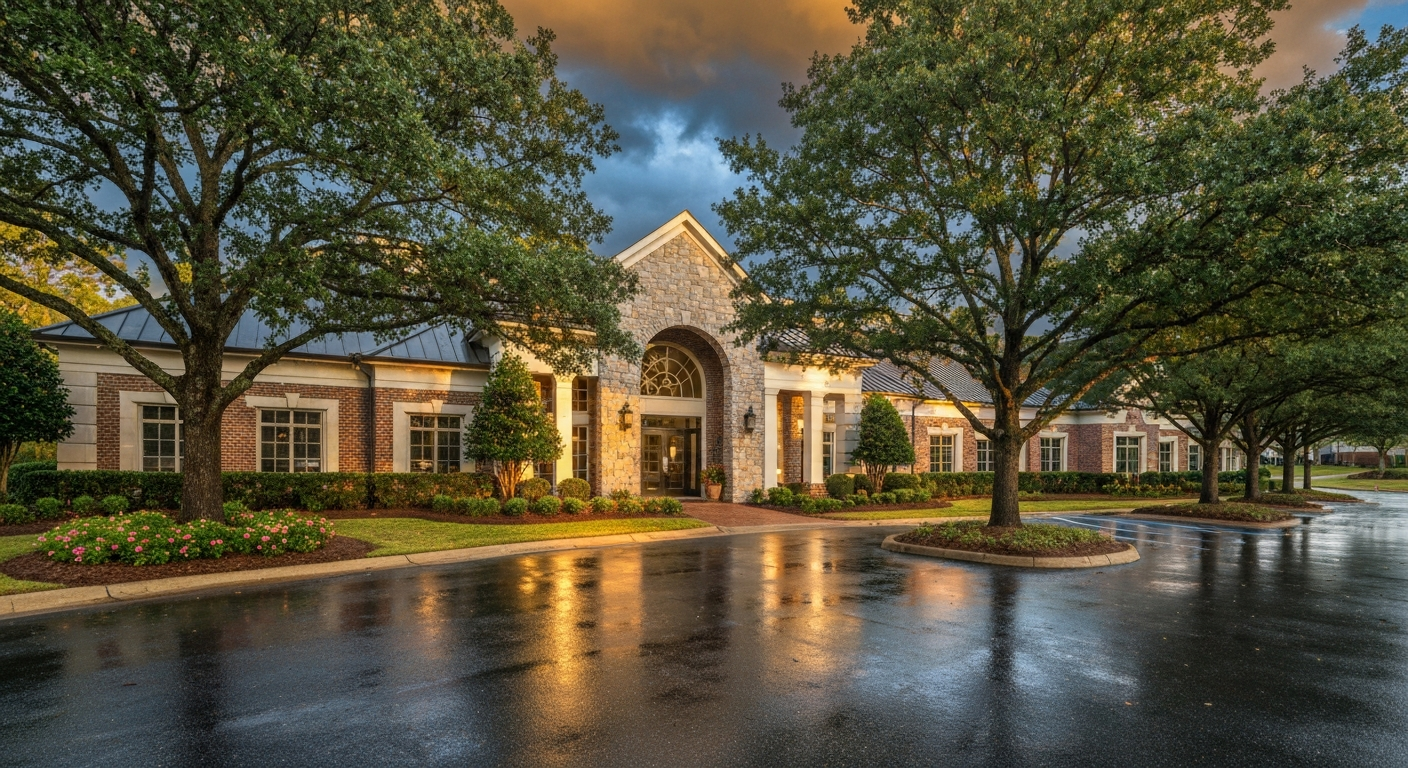
Owner financing lets you buy commercial property directly from sellers without bank loans, but it carries significant risks and capital requirements. For many Acworth business owners, leasing a fully serviced private office at Bells Ferry Prime delivers the same flexibility with lower costs, no hidden fees, and zero property ownership headaches.
Understanding what is owner financing commercial real estate can open doors for entrepreneurs who struggle to qualify for traditional bank loans. This creative financing approach allows property sellers to act as lenders, giving buyers an alternative path to commercial property ownership. However, the reality of owner-financed deals involves complex negotiations, substantial down payments, and risks that many first-time buyers overlook.
For small business owners, freelancers, and consultants in Northwest Metro Atlanta, the question often shifts from how to buy commercial property to whether buying makes sense at all. The good news is that modern workspace solutions now offer the flexibility and professional environment you need without the financial burden of property ownership. This guide explores both sides of the equation so you can make the right decision for your business stage and growth trajectory.
How Owner Financing Works in Commercial Property Deals
Owner financing, also known as seller financing commercial property, creates a direct lending relationship between the property seller and buyer. Instead of obtaining a mortgage from a bank or credit union, the buyer makes monthly payments to the seller over an agreed-upon term. The seller retains the deed or a lien on the property until the buyer completes all payment obligations.
The Seller Acts as the Lender
In a traditional commercial real estate transaction, a bank evaluates your creditworthiness, business financials, and the property value before approving a loan. With owner carry commercial real estate arrangements, the seller takes on this role. They assess the risk of extending credit to you and determine whether your business profile meets their requirements.
This arrangement benefits sellers who want to defer capital gains taxes, generate passive income through interest payments, or sell a property that might not qualify for traditional financing. For buyers, it can mean access to properties that banks would otherwise reject due to building condition, business tenure, or credit history.
Payment Structure and Terms
Owner-financed deals typically include several negotiable components:
- Down payment amounts ranging from 10% to 30% of the purchase price
- Interest rates that often exceed conventional commercial loan rates by 2-4%
- Loan terms spanning 5 to 15 years, with some including balloon payment requirements
- Amortization schedules that may differ from the actual loan term
- Prepayment penalties or early payoff provisions
The flexibility of these terms makes owner financing attractive for creative commercial real estate financing strategies. However, this flexibility also means buyers must carefully evaluate each component to avoid unfavorable long-term obligations.
Your Private Office Awaits
Bells Ferry Prime — Acworth, GA
Fully serviced private offices with no hidden costs. Flexible leases available now.
Documentation and Legal Structure
A properly structured owner financing agreement requires extensive documentation. Essential components include a promissory note outlining payment terms, a deed of trust or mortgage document securing the loan against the property, and a purchase agreement detailing all transaction conditions. Title insurance, property inspections, and environmental assessments remain just as important as they would be in a bank-financed transaction.
Working with a commercial real estate attorney is non-negotiable when pursuing seller financing. The legal complexity of these arrangements creates opportunities for costly mistakes that could jeopardize your business and personal finances.
Key Benefits of Seller Financing for Business Owners
Owner Financing vs. Traditional Bank Financing
Traditional Bank Loan
- Requires 680+ credit score typically
- 20–30% down payment standard
- 45–90 day closing timeline
- Extensive documentation required
- Rigid qualification criteria
- 2–3 years business history needed
Owner Financing
- Flexible credit requirements
- 5–15% down payment negotiable
- 14–30 day closing possible
- Simplified paperwork process
- Terms negotiated directly with seller
- Ideal for newer businesses & startups
Source: Commercial Real Estate Finance Council, National Association of Realtors 2024 data. Owner-financed deals represent approximately 10–15% of commercial property transactions.
Despite the complexity, owner financing offers genuine advantages for qualified buyers in the right circumstances. Understanding these benefits helps you evaluate whether this commercial property financing option aligns with your business goals.
Faster Closing Timeline
Traditional commercial mortgages require extensive underwriting that can stretch closing timelines to 60-90 days or longer. Banks demand detailed financial documentation, property appraisals, environmental reviews, and committee approvals before releasing funds. Owner-financed transactions can close in as few as two to three weeks when both parties are motivated and organized.
This speed advantage matters when you identify a property that meets your needs and want to secure it before competing buyers. In competitive Northwest Metro Atlanta markets, faster closing capability can make the difference between winning and losing a deal.
More Flexible Qualification Standards
Banks apply rigid qualification criteria based on credit scores, debt-to-income ratios, time in business, and cash reserves. Many small business owners, especially those in their first few years of operation, cannot meet these requirements despite running profitable companies.
Sellers evaluating owner carry commercial real estate deals often focus on different factors:
- The strength of your business model and growth potential
- Your track record of meeting financial obligations
- The size of your down payment and personal investment in the deal
- Your plans for the property and intended use
- References from landlords, business partners, or other creditors
This flexibility allows entrepreneurs with non-traditional backgrounds to access commercial property ownership when banks say no.
Negotiable Terms and Creative Structuring
Unlike bank loans with standardized terms, owner financing agreements offer room for creative structuring. You might negotiate interest-only payments during the first year while establishing your business at the new location. Some sellers accept graduated payment schedules that increase as your business grows. Others may consider equity participation arrangements or lease-option structures that give you time to qualify for traditional financing.
This flexibility extends to the purchase price itself. Sellers willing to offer financing often accept offers they might reject from bank-financed buyers because the interest income compensates for a lower sale price.
Risks and Considerations Before Signing an Owner Carry Agreement
The advantages of owner financing come with substantial risks that every buyer must understand. Rushing into an owner-financed deal without proper due diligence can create financial problems that persist for years.
Higher Interest Rates and Total Costs
Sellers financing commercial property purchases take on significant risk. They compensate for this risk by charging interest rates typically 2-5% higher than current bank rates. On a $500,000 property financed over 15 years, this difference can add $100,000 or more to your total cost of ownership.
Calculate the true cost of any owner financing arrangement by comparing it to conventional financing options, even if you do not currently qualify. Understanding the premium you pay for seller financing helps you make an informed decision about whether the benefits justify the costs.
Balloon Payment Requirements
Many owner financing agreements include balloon payment provisions that require you to pay off the remaining loan balance at a specified date, often 5-7 years into the term. This structure assumes you will refinance into a conventional loan once your business establishes a stronger track record.
Balloon payments create significant risk if you cannot obtain refinancing when the balloon comes due. Market conditions, interest rate changes, property value fluctuations, or business setbacks could leave you unable to meet this obligation. The consequences may include property foreclosure, personal liability, and severe damage to your credit profile.
Due-on-Sale Clauses and Title Issues
Some sellers offering owner financing still have existing mortgages on their properties. If their lender discovers the sale, a due-on-sale clause could trigger immediate payment of the entire remaining mortgage balance. This situation can unravel your purchase and leave you with substantial losses.
Title verification becomes critical in owner financing transactions. Ensure the seller has clear ownership authority and no liens, judgments, or encumbrances that could affect your rights. A title search and title insurance protect you from problems the seller may not disclose or even know about.
Legal and Tax Implications
Owner financing structures carry tax implications for both buyers and sellers that differ from conventional transactions. The timing of deductions, treatment of interest payments, and depreciation schedules may vary based on how the agreement is structured. Consult with a tax professional before finalizing any owner-financed purchase.
The legal documentation must protect your interests while complying with state and federal lending regulations. Improperly structured deals could expose you to liability or invalidate favorable terms you negotiated. Never sign owner financing documents without review by a qualified commercial real estate attorney.
When Leasing Makes More Sense Than Buying Commercial Property
While owner financing offers a path to property ownership, many business owners discover that leasing provides better alignment with their actual needs. The decision between buying and leasing commercial space deserves careful analysis based on your specific situation.
Lower Capital Requirements for Growing Businesses
Even owner-financed purchases require substantial upfront capital. Down payments of 15-30% on commercial properties in Acworth and Northwest Metro Atlanta can range from $75,000 to $300,000 or more, depending on property size and location. Add closing costs, legal fees, inspection expenses, and initial improvement costs, and you may need $100,000 to $500,000 before opening your doors.
Leasing a professional workspace preserves your capital for business growth activities that generate returns:
- Marketing and customer acquisition investments
- Equipment and technology that improves productivity
- Hiring staff to expand your service capacity
- Inventory or supplies needed to serve more customers
- Training and professional development
- Emergency reserves that protect against unexpected challenges
For businesses in growth phases, deploying capital into property ownership often reduces the resources available for activities that actually drive revenue.
Flexibility to Scale Without Long-Term Property Commitments
Commercial property ownership locks you into a specific location for years or decades. If your business outgrows the space, needs to relocate closer to customers, or pivots in a direction that changes your workspace requirements, selling commercial property takes time and often involves significant costs.
Flexible lease arrangements allow you to match your workspace to your current needs while maintaining the ability to adapt as circumstances change. Month-to-month and short-term lease options give you the agility to respond to opportunities and challenges without the burden of property ownership obligations.
This flexibility proves especially valuable for businesses in their first five years, when growth trajectories remain uncertain and market conditions can shift rapidly.
All-Inclusive Pricing Eliminates Hidden Ownership Costs
Property ownership costs extend far beyond mortgage payments. As an owner, you bear responsibility for property taxes, insurance, maintenance, repairs, utilities, landscaping, parking lot maintenance, HVAC systems, roof repairs, and dozens of other expenses that arise unpredictably.
A fully serviced private office lease consolidates these variables into a single predictable monthly payment. You know exactly what your workspace costs each month, making budgeting straightforward and eliminating surprise expenses that can disrupt cash flow.
Consider the hidden costs of commercial property ownership:
- Property taxes that increase annually regardless of your business performance
- Building insurance premiums that rise after claims or market changes
- HVAC replacement costs that can exceed $20,000 for commercial systems
- Roof repairs or replacement costs of $50,000 or more
- Parking lot resurfacing and maintenance expenses
- Plumbing, electrical, and structural repairs
- Landscaping and exterior maintenance
- Compliance costs for building codes, accessibility requirements, and safety regulations
When you lease a fully serviced office, the property owner absorbs these costs and risks. Your financial exposure is limited to your lease payment, allowing you to focus entirely on running your business.
Finding the Right Commercial Space Solution in Acworth, GA
Whether you pursue owner financing, traditional purchase financing, or leasing, finding the right workspace solution requires honest assessment of your business needs and circumstances. The best choice depends on factors unique to your situation.
Evaluate Your Business Stage and Growth Trajectory
Consider where your business stands today and where you expect it to be in three to five years. Early-stage businesses benefit from flexibility that allows them to adapt as they learn what works. Established businesses with predictable revenue and stable space requirements may find ownership more attractive.
Ask yourself these questions:
- How predictable is your revenue over the next several years?
- Do you expect to need more or less space as your business evolves?
- How important is location flexibility to serving your customers?
- What would happen to your business if you needed to relocate quickly?
- Do you have the expertise and time to manage property ownership responsibilities?
For many professionals in Northwest Metro Atlanta, the answers point toward flexible leasing as the smarter near-term solution, even if eventual property ownership remains a long-term goal.
Compare Total Costs of Ownership Versus Leasing
Create a detailed comparison of your true costs under each scenario. For ownership, include purchase price, financing costs, closing costs, ongoing taxes and insurance, estimated maintenance and repairs, and the opportunity cost of capital tied up in property equity.
For leasing, calculate your monthly lease payment multiplied by your expected occupancy period. Factor in any moving costs if you anticipate relocating during your business planning horizon.
Many business owners discover that leasing costs less over a 5-10 year period when all ownership expenses are included in the analysis. Even when ownership appears cheaper on paper, the flexibility value of leasing often tips the balance, especially for businesses that may need to adapt to changing conditions.
Explore Flexible Office Options at Bells Ferry Prime
Tiva Properties offers private office suites at Bells Ferry Prime in Acworth, GA that provide an attractive alternative to property ownership. Our fully serviced offices range from 193 to 442 square feet, with monthly rates from $595 to $1,295—all inclusive with no hidden costs.
What makes our professional workspace different:
- Private, lockable office suites in a professional building environment
- Flexible lease terms that match your business needs
- All-inclusive pricing covering utilities, maintenance, and common area upkeep
- Professional address in Acworth serving Northwest Metro Atlanta clients
- No long-term commitments tying up your capital or limiting your options
- Move-in ready spaces that eliminate build-out costs and delays
You can view our available office suites to explore options that fit your space requirements and budget. Our team helps business owners find the right fit without pressure or hidden agendas.
For entrepreneurs researching what is owner financing commercial real estate, understanding all your options leads to better decisions. Property ownership through creative financing may serve your long-term goals, but flexible office leasing often provides the immediate solution that lets you focus on building your business today.
Frequently Asked Questions
What is the typical down payment for owner-financed commercial real estate?
Down payments for owner-financed commercial real estate typically range from 10% to 30% of the purchase price. Most sellers require at least 15-20% to ensure the buyer has meaningful financial commitment to the transaction. The exact amount depends on the seller’s risk tolerance, the property condition, your creditworthiness, and the overall negotiated terms. Higher down payments often result in more favorable interest rates and terms from the seller.
How does owner financing differ from a traditional commercial mortgage?
Owner financing involves the property seller acting as the lender, while traditional commercial mortgages come from banks or financial institutions. Owner financing typically closes faster with more flexible qualification requirements, but carries higher interest rates and may include balloon payment provisions. Traditional mortgages offer lower rates and longer terms but require extensive documentation, strong credit profiles, and longer approval timelines. Both options require careful due diligence and legal review before proceeding.
Is leasing or buying commercial office space better for a small business?
The best choice depends on your business stage, capital availability, growth trajectory, and risk tolerance. Leasing typically benefits businesses in growth phases that need flexibility, want to preserve capital for operations, or face uncertain space requirements. Buying makes more sense for established businesses with stable revenue, predictable space needs, and substantial capital reserves. Most small businesses benefit from leasing during their first several years while building the foundation for potential future property ownership.
What are the advantages of flexible office leases over property ownership?
Flexible office leases offer lower upfront capital requirements, predictable monthly costs with no surprise maintenance expenses, the ability to scale up or relocate as your business evolves, and freedom from property management responsibilities. You avoid tying up capital in real estate equity, eliminate risks associated with property value fluctuations, and maintain agility to respond to business opportunities. For many professionals, these advantages outweigh the equity-building potential of ownership during their business growth years.
Ready to Find Your Perfect Office in Acworth?
Tour Bells Ferry Prime today — private offices from $595/mo, all inclusive.
Whether you decide to pursue owner financing, traditional property purchase, or flexible office leasing, the right workspace supports your business goals without creating unnecessary financial strain. For small business owners and professionals in Acworth and Northwest Metro Atlanta ready to explore their options, schedule a tour today at Bells Ferry Prime. Our team at Tiva Properties is ready to show you how a fully serviced private office can provide the professional environment you need while preserving your flexibility for the future.
If you are ready to secure your workspace without the complexity of property ownership, you can Apply Now to begin the straightforward process of joining our professional office community.
The Tiva Properties team manages Bells Ferry Prime, a professional office building in Acworth, GA offering fully serviced private offices for lease. Call us at (478) 210-7444 or visit tiva.properties to schedule your tour.